
I have been thinking lately about Vincent van Gogh’s The Mulberry Tree (1889), housed at the Norton Simon Museum of Art in Pasadena, California. It was one of Van Gogh’s favorite paintings, yet it was made during a particularly troubled period of an already troubled life. Van Gogh had recently been admitted to the asylum at Saint-Rémy-de-Provence, struggling to recover from the delirious episodes that followed the famous incident in which he cut off his own ear. While in treatment, he painted The Mulberry Tree alongside other celebrated works such as The Starry Night and Irises. Less than a year later, having written to his brother Theo to assure him that he still loved art and life very much, he died by his own hand three weeks later. He shot himself in a field where he had been painting; the wound was not immediately fatal, and he was able to walk back to his room at the Auberge Ravoux. Van Gogh died the following evening. Theo, who rushed to his side, reported his last words as la tristesse durera toujours (“the sadness will last forever”).
The vivid brushwork and impasto of The Mulberry Tree captivates me. It draws the viewer into a textured, three-dimensional world entirely unlike the practiced, clean lines of classical painting. The museum’s object label goes so far as to describe it as “almost a bas-relief sculpture.” The contrast between the bright, rocky slope, the tree’s dark autumn colors, and the deep blue sky gives the painting a peculiar vitality and energy. It reminds me of the natural world—or rather, it awakens in me the feeling of the natural world. And even though the landscape of Saint-Rémy is not the landscape of my youth, in an almost Proustian way, I find myself carried back to the years I spent under open skies working as a mountain-climbing guide before returning to graduate school.
I.
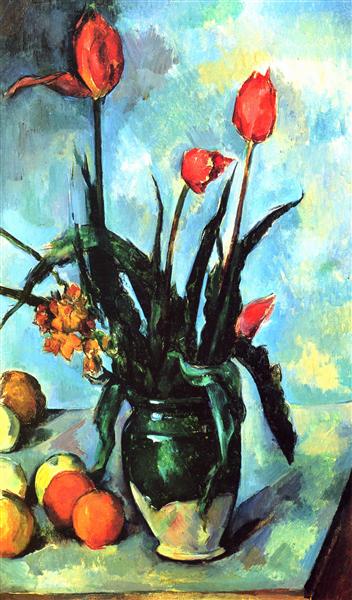
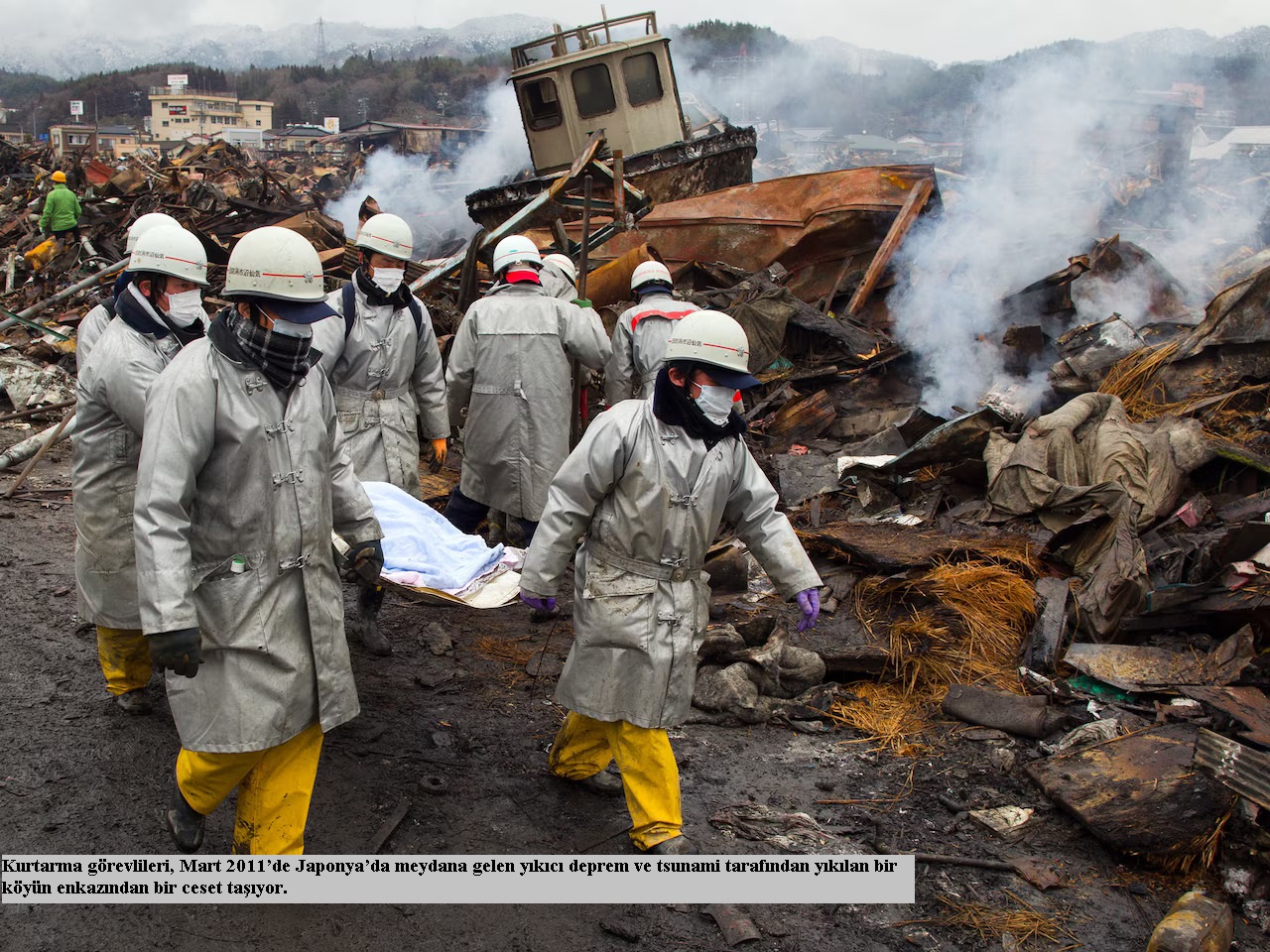
But on that particular midwinter day, I found myself uneasy and distracted, unable to connect with the painting or with the familiar, concrete memories of the natural world. Two weeks earlier, Russian military forces had swept into Ukraine. The invasion was, of course, no surprise. Putin’s thinking, like that of all tyrants and bullies, was oderint dum metuant (“let them hate, so long as they fear”). It was clear he had ambitions to build a “greater Russia” and that no one in the West would push back firmly enough to deter him. So what was distracting me that midwinter day was not shock or surprise; it was, rather, as I wandered the corridors of the museum with my thoughts loosely on post-Impressionist painting, the growing awareness of the suffering consuming people like me. A landscape laid to waste. A culture under siege. Civilians executed. Women attacked. Children orphaned and displaced. Meanwhile, my museum companions were drifting through the cool shadows of the gallery, absorbed in Cézanne’s Tulips in a Vase.
In the face of the horror unfolding in Eastern Europe, how could anyone have the audacity to spend an afternoon daydreaming or pursuing aesthetic reflection? Such trivial diversions seemed unjust—even monstrous. The thought of returning to campus to spend the evening discussing narrative identity in James Joyce’s The Dead with my students also made me feel ashamed.
My thoughts took me back to my graduate school days. There I remembered my struggle with the value of studying philosophy, and with using my skills and energies (however modest) to directly affect the world: feeding the hungry, sheltering the displaced, protecting the environment. Most academics write their articles primarily for other academics and publish them in journals that are often left unread even by the academics about whom they are written. I might say the endeavor has an onanistic quality, except that the abstract, measured, and emotionless character of most academic writing falls short even of the pleasures of onanism. A friend in Boston tried to console me by reminding me that the life of teaching is its own kind of sacrifice—not interchangeable with the “bodily works of mercy” such as feeding the hungry or clothing the naked, but nonetheless a “spiritual work of mercy,” a necessary and fundamental good in the world. Yet in the face of appalling injustice, appalling suffering, or existential threat, it is hard not to question the value of dispassionate thinking and daydreaming, of poetry, art, and the humanities more generally.
II.
I suspect that my students—at least some of them—ask themselves similar questions. The world we share is full of serious challenges; and there are countless potential existential crises waiting in the wings for their moment on the stage. We have just come through a global pandemic unlike anything seen in a century, and the effects of COVID-19 are still destabilizing the world economy and reverberating through individuals’ lives. I remember telling colleagues at my university in early January 2020—colleagues who were still in denial about what was happening—“Each of us is going to know someone who dies from this.” Unfortunately, that turned out to be quite accurate. But in a certain sense we were lucky with COVID-19. Other zoonotic pathogens (those transmissible from animals to humans) would have been incalculably worse. The infection fatality rate for COVID-19 appears to hover around 1–2%, but for MERS it is about 35%, for H5N1 influenza 50–60%, and for Nipah 40–75%. Each of these viruses has jumped from animals to humans but has not—yet—become transmissible enough to cause a pandemic, which would rival the Plague of Justinian. As the invasion of Ukraine has demonstrated, war remains a threat. The people whose suffering horrified me in the gallery that afternoon had, just weeks before, been living lives like mine: pursuing personal and professional goals, visiting their own museums, sipping coffee and wine, playing with their children, living, laughing, loving. While more people are living free of violence at any time in human history, resurgent authoritarianism, bellicose rhetoric, and alarming nuclear saber-rattling remind us that democracy, freedom, peace, and stability are fragile achievements—never won once and for all and for everyone. Not all conflicts are planned, or even the product of rational calculation; they can begin accidentally or unintentionally, and can easily spiral out of control, escalate, and spread. And of course, against the backdrop of all these troubling possibilities, a genuinely unprecedented existential threat simmers, one that we are not attending to with sufficient urgency. Anthropogenic (human-caused) climate change is slowly cooking us—slowly, but cooking us nonetheless, like the proverbial frog, fictional though it may be, that fails to leap from the gradually heating pot.
.jpg)
III.
Again I ask: in a world like this, who has time for Beowulf?
In October 1939, C.S. Lewis gave a sermon at Saint Mary the Virgin in Oxford, which he titled “Learning in Wartime.” That September, the United Kingdom had declared war on Germany, and most of the students present that day were waiting to volunteer or be conscripted. The full horror of what was to come—the London Blitz, the slaughterhouse on the beaches of Normandy, the Holocaust, the camps—could not have been known at the time Lewis gave his sermon. Yet the magnitude of what was to come was certainly present in the mind of every person in the church that day. This was a country that had shed the blood of a generation in the war “to end all wars” only twenty years before. Lewis himself was a veteran of the Battle of the Somme (1916). Now he and his congregation found themselves facing the dark abyss of Götterdämmerung once more, awaiting a catastrophe that was increasingly accepted as inevitable, however unpredictably it might unfold—that “deep breath before the plunge” as Lewis’s friend and fellow Somme veteran J.R.R. Tolkien described it.
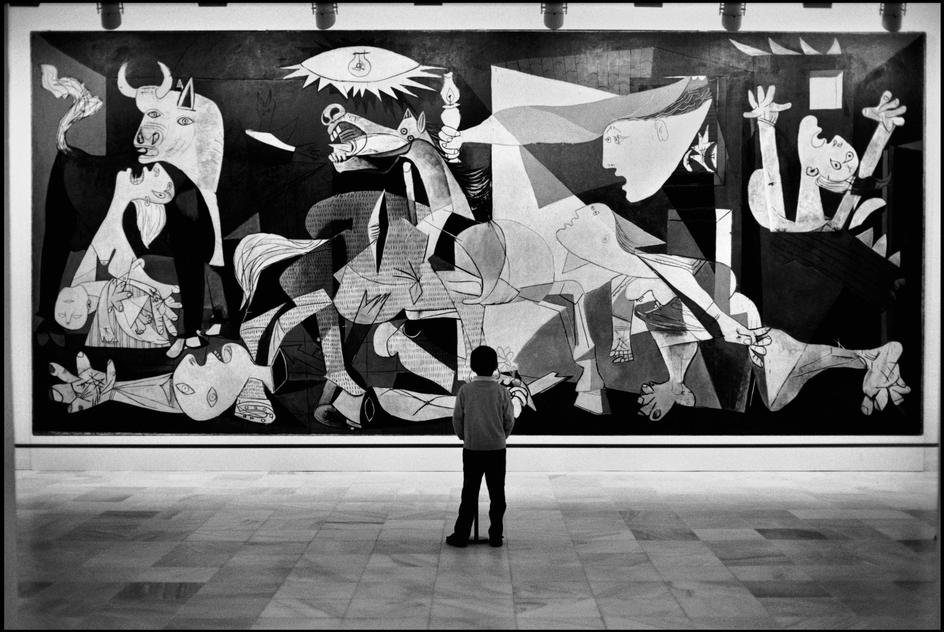
Oxford students must have asked themselves how a person of good conscience and sound character could sit down to a formal dinner at Magdalen College and talk about Plotinus or Byron, with the shadow of Nazi Germany spreading across Europe and soon to knock at England’s door. Faced with what was coming—the looming threat on the horizon, the sacrifice required to meet it, the possibility that in spite of that sacrifice everything might be lost—how could anyone justify studying mathematics, composing music, looking at distant galaxies through a telescope, or reading poetry? We have sardonic proverbs for describing such activities: fiddling while Rome burns, polishing the brass on the Titanic…
IV.
How can a person devote themselves to “peacetime pursuits” in the midst of war, epidemic, or other catastrophe? Why start a project if there is no hope of finishing it? These are the natural questions to ask when confronted with the kinds of crises I have been describing—crises that demand and deserve our focused attention and effort.
We say: the world is different now. A line has been crossed. This is new; we must act. George Floyd was killed by police in broad daylight! There are mass graves full of innocents outside Mariupol! COVID-19 is mutating! The Anthropocene is upon us!
All true, of course. But Lewis rightly observes that a crisis like war “does not create an absolutely new situation; it simply aggravates the permanent human situation so much that we can no longer ignore it,” and adds: “Human life has always been lived on the edge of a precipice.” If this is true of war, the same can be said of injustice, economic hardship, pandemic, and many other crises. How many of the difficulties that keep us awake at night are genuinely new in the relevant sense? Does anyone who thinks the conflict in Ukraine or the COVID-19 pandemic is unprecedented suffer from a serious case of historical myopia? Were young people any less anxious waiting to be sent to Flanders in 1916? Or when hundreds of thousands were struck down by the “Spanish” Flu? Were parents any more optimistic in October 1962, with global nuclear war approaching?
V.
It is true that history is a lottery and none of us can choose where we enter the great narrative of humanity. Wherever and whenever we are born, for better or worse, we must play the hand we are dealt. Life is not fair; and in the long arc of history we find wealth and poverty, scarcity and abundance, wartime and peacetime, times of plague and times of health. Yet every generation and every individual lives under the constant threat of obliteration—in the literal sense of “reduction to nothing”—just as the war descending on Lewis and his congregation, unknown but certain.
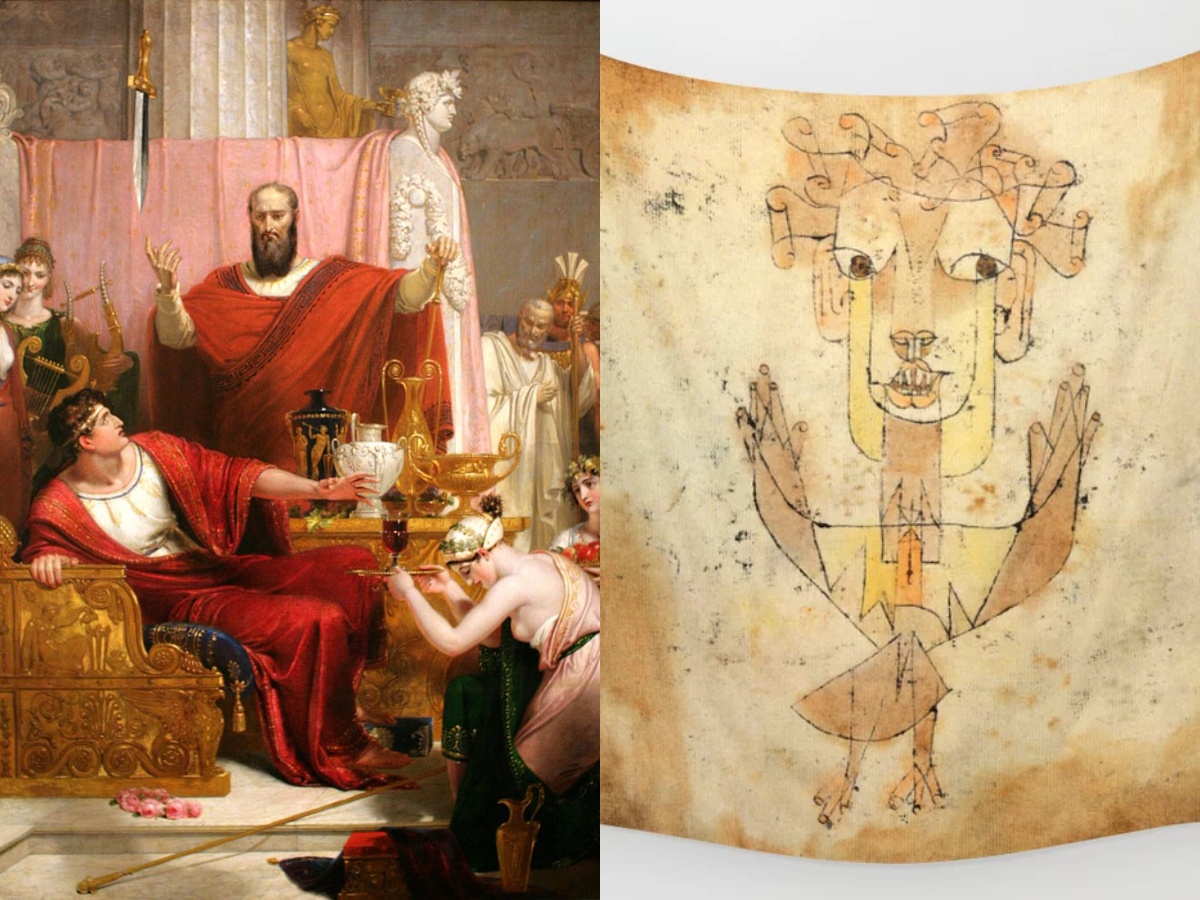
But if every generation eats beneath the sword of Damocles, perhaps the question is not that wartime is the wrong time for Beowulf, but that there is never a “right” time for Beowulf. Perhaps we should focus on more urgent matters. Perhaps only when we have addressed these concrete, existential challenges will we have earned the right and the time for art and literature. For this reason, in the midst of the Revolutionary War, John Adams wrote to his wife Abigail:
“I must study Politics and War that my sons may have liberty to study Mathematics and Philosophy. My sons ought to study Mathematics and Philosophy, Geography, natural History, Naval Architecture, navigation, Commerce and Agriculture, in order to give their Children a right to study Painting, Poetry, Music, Architecture, Statuary, Tapestry and Porcelain.”
***
Translated by: Ahmet Er
Note: This essay is translated from Brian Treanor’s “Humanities on a Burning Planet”, published in The Philosopher’s Magazine on March 28, 2024. Treanor holds the Charles S. Casassa Chair and is Professor of Philosophy at Loyola Marymount University. His publications include Melancholic Joy: On Life Worth Living (Bloomsbury 2021), Emplotting Virtue (SUNY 2014), and Aspects of Alterity (Fordham 2006).