
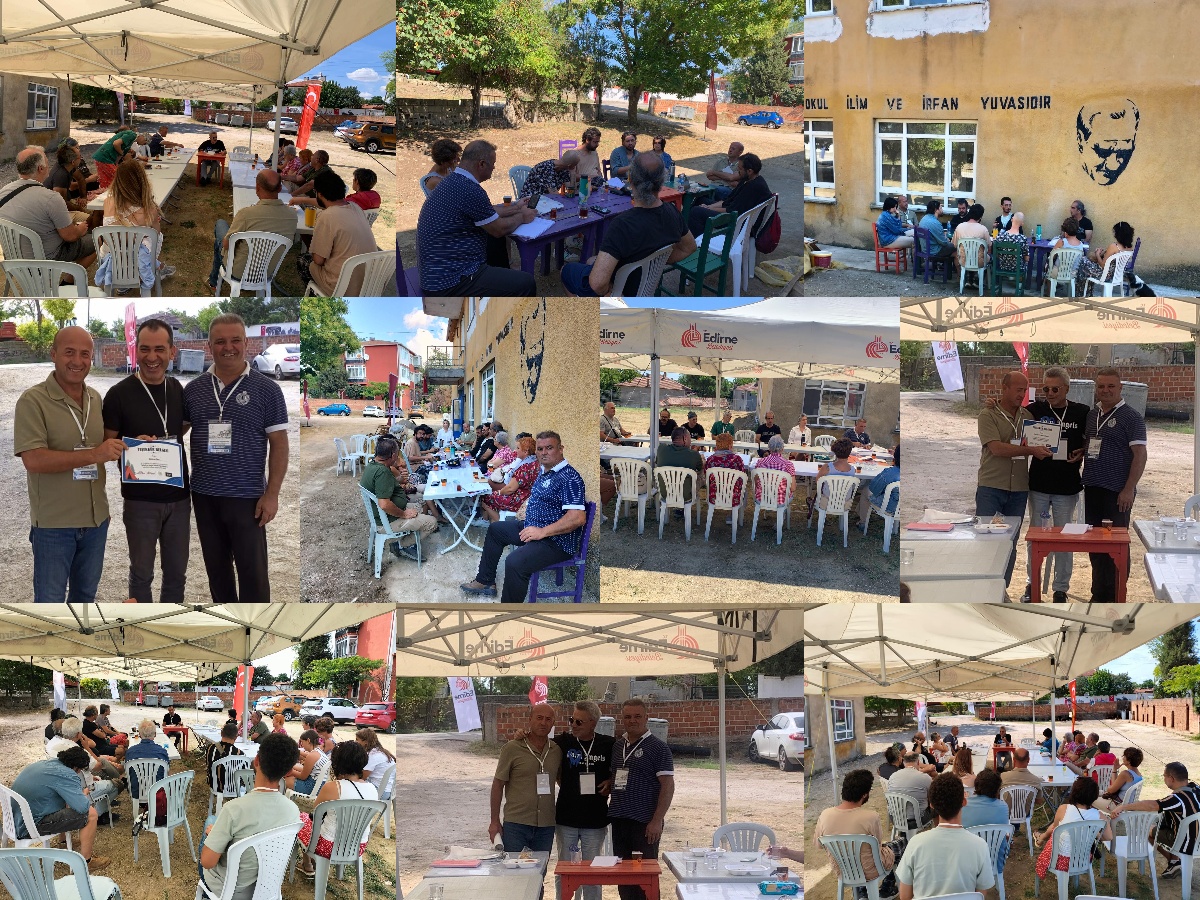
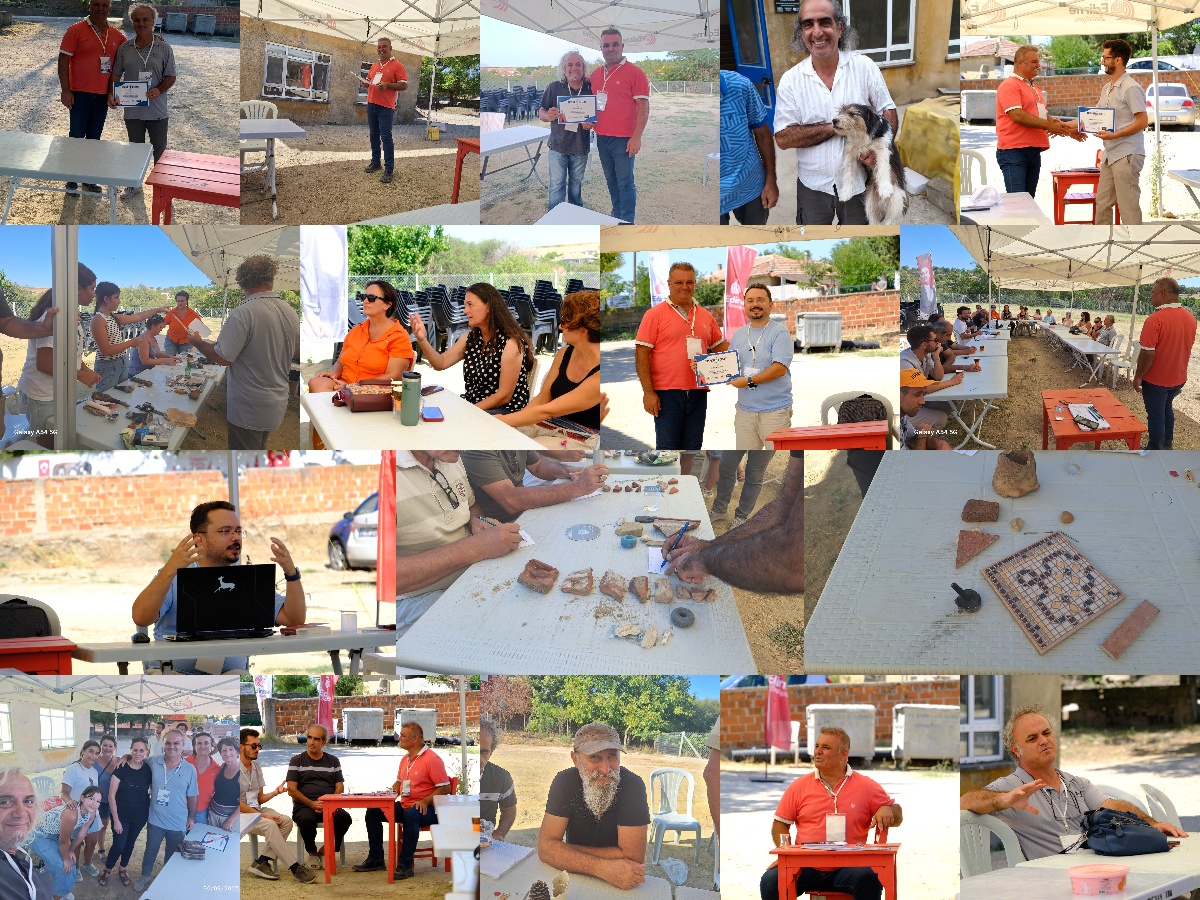
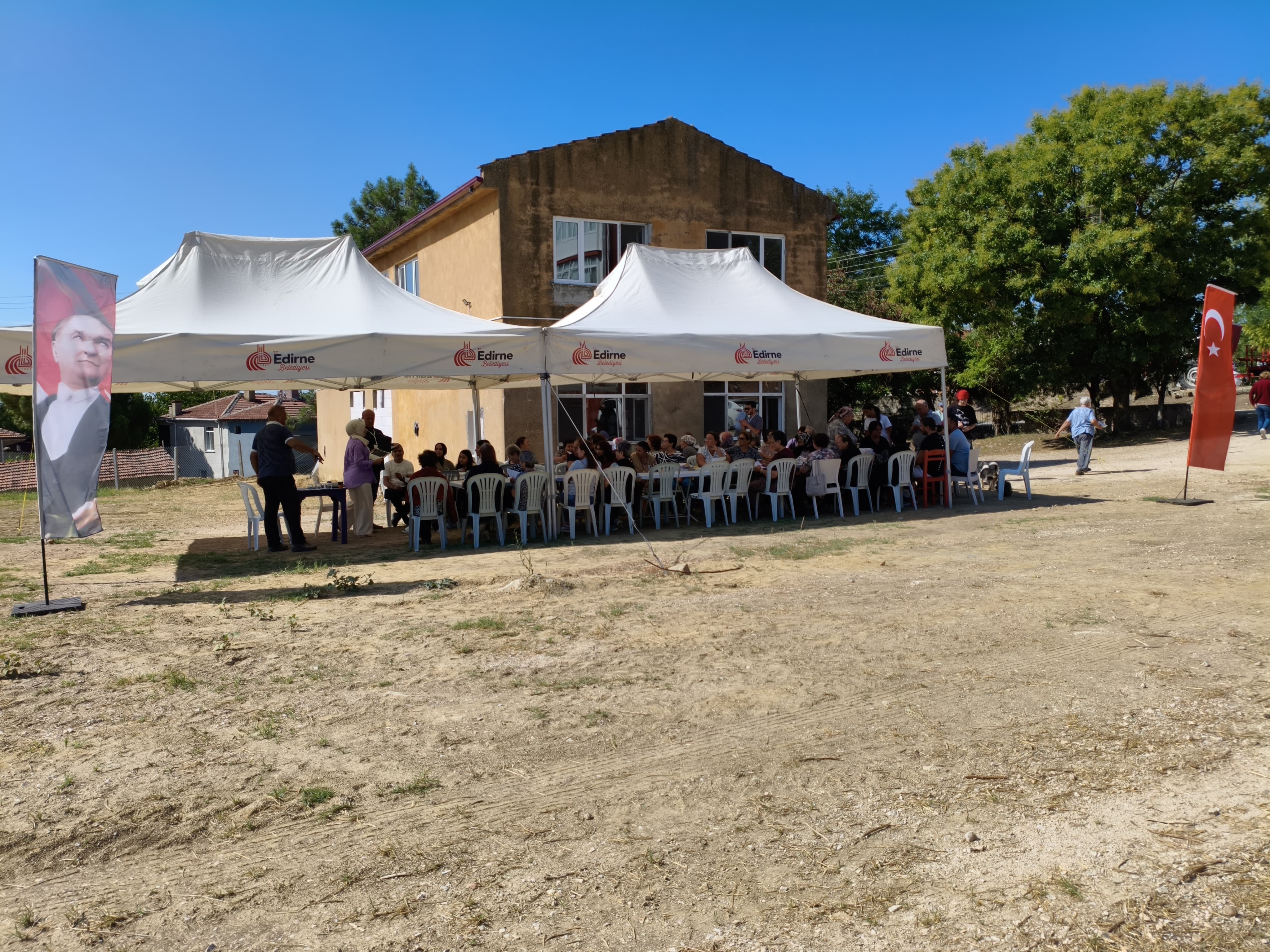
The Applied Philosophy Association Camp held between 25–30 August 2025 in Eskikadın Village, Meriç district of Edirne, was a gathering that brought together philosophy and art, everyday life and intellectual inquiry. The village, with a population of approximately 370, is located 11 kilometres from the centre of Edirne, a short distance from the Kapıkule road. Known in historical records as “Kademköy,” Eskikadın is a small settlement where agricultural production and rural life still thrive. Its natural surroundings, tranquil atmosphere, and the warmth of the local community made it an ideal venue for the camp.
This year’s event was realised through the collaboration of Edirne Municipality, the Headman’s Office of Eskikadın Village, and Tuna & Art Academy. These joint efforts ensured that the camp became not merely an intellectual and artistic programme but a shared space enriched by the support of local government and community.
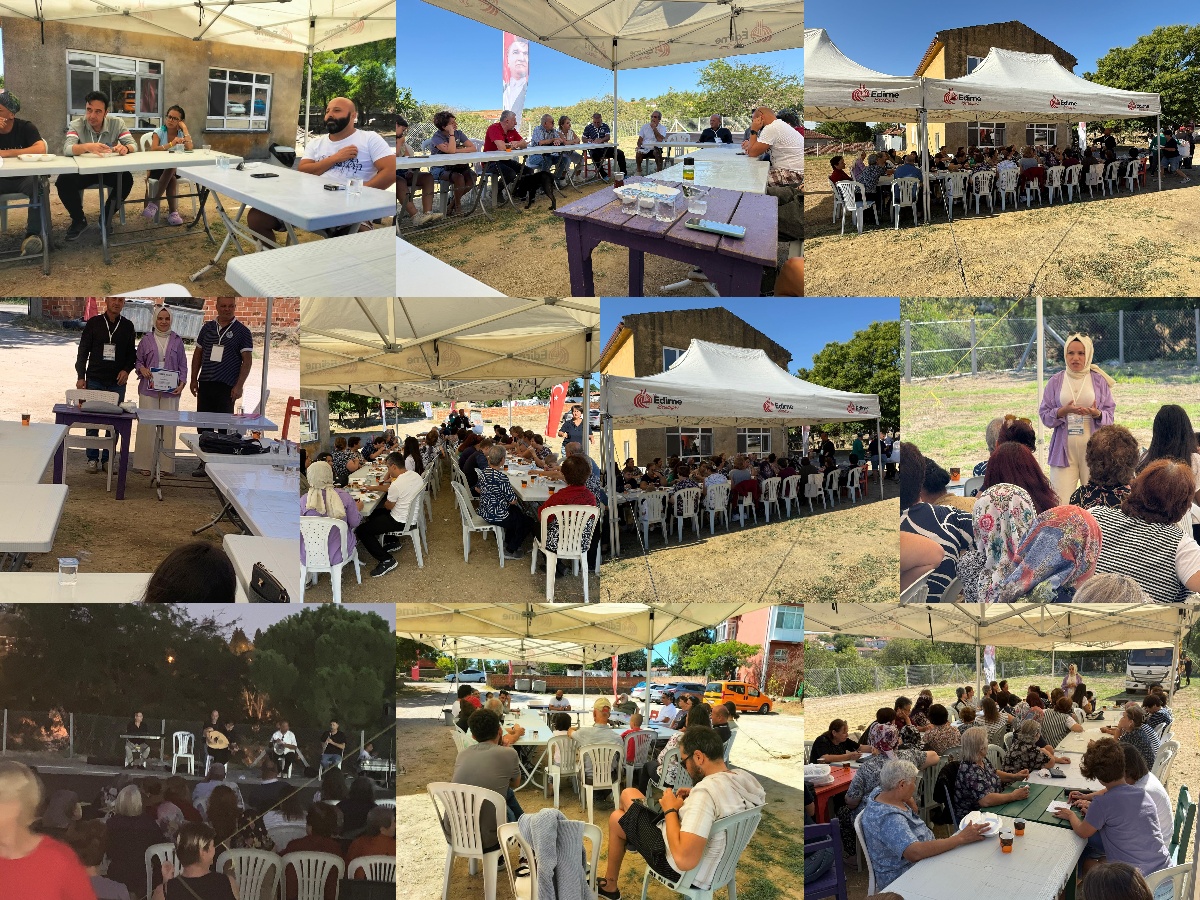
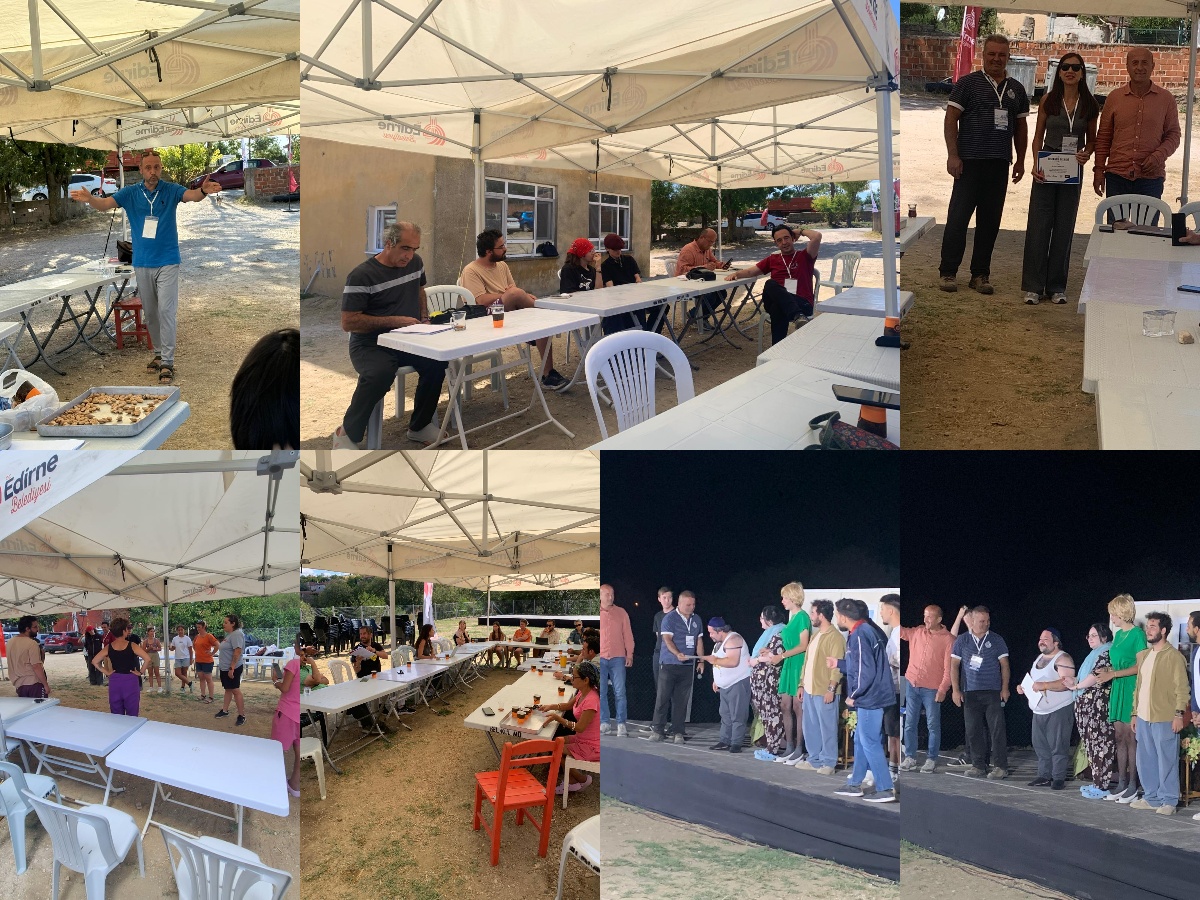
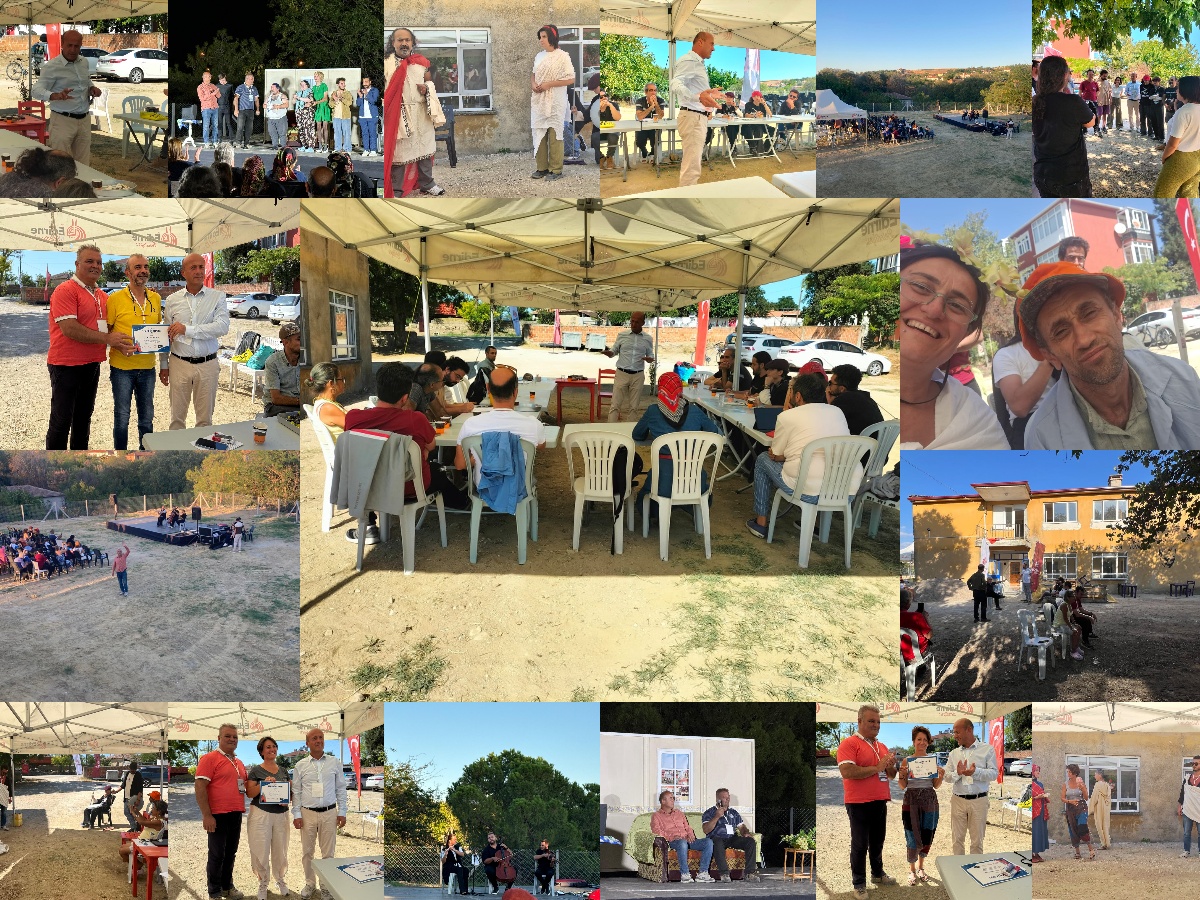
Throughout the camp, academics, artists, and participants from various disciplines came together to discuss philosophical themes such as freedom, ethics, love, history, and consumer culture; they participated in theatre, music, poetry, breathing exercises, and drama workshops. Participants were not mere observers; they took the stage, debated, created, and thought together. Each day the programme deepened through theoretical presentations and workshops that allowed philosophy to be tested in the body, in sound, and in action.
When the natural and cultural atmosphere of Eskikadın Village combined with the support of Edirne Municipality and local stakeholders, this gathering became a meaningful example of rethinking and sharing philosophy beyond academic confines, returning it to the heart of life.
Monday, 25 August 2025 opened the camp’s first full programme with rich and intense content. In the morning hours, we embarked on a philosophical journey with Can Karaböcek’s presentation titled “Conservatism in Contemporary Turkish Thought.” While various dimensions of conservatism in Turkey’s intellectual tradition were debated, participants gained new perspectives on current social and political contexts. This was followed by the Poetry Workshop led by Erdoğan Eğmen, where we rediscovered the meanings evoked by words; the creative power of poetry nourishing both individual sensibility and shared experience came to the fore.
As the day progressed, we experienced the harmony of body and mind through “Proper Breathing and Diaphragmatic Breathing” exercises guided by Şahver Yeşil. Practices of concentration, relaxation, and establishing inner balance through breath control were experienced. One of the striking moments of the programme was the fencing duel between Erdoğan Eğmen and S. Hakan Coşkuntuna. This encounter highlighted the discipline and aesthetic dimension of sport while also bearing the quality of a performance that added dynamism and vitality to the camp’s philosophical discussions.
In the afternoon, we focused on the rhythm of the stage and the creativity of movement through the “Acting Training and Choreography” session led by S. Hakan Coşkuntuna. Participants discovered the expressive possibilities of the body and saw how liberation through the stage might be possible.
Thus the camp’s first day offered participants a wide spectrum stretching from philosophical debate to poetic sensitivity, from the balance established through breathing exercises to the aesthetic encounter of the fencing duel, and to the freedom of the stage felt through acting.
Tuesday, 26 August 2025 opened with sessions focused on the theme of freedom. Ahmet Er and Murat Berkay Özbek approached freedom through discussions of existentialism and artificial intelligence. The understanding of freedom in existentialism as the individual’s responsibility to construct their own meaning was compared with the algorithmic determinability of behaviour in the example of AI. Aziz Ardıç added a political dimension to the discussion, raising the social context of freedom. His references to David Hume’s theory of association opened the door to thinking of freedom not merely as an individual power but as a possibility reproduced within social relations and political order. This session established the theoretical foundation of the camp and focused participants on the problem of freedom at both individual and collective levels.
Later in the day, the expressive possibilities of movement and rhythm were explored in the acting and choreography workshop led by S. Hakan Coşkuntuna. Participants experienced the body as an instrument that reveals thought and discovered the points where freedom on stage meets discipline. Cengiz Çakmak’s talk titled “Philosophy, the Human, and Love” then approached the theme of love through mythology and political philosophy. Çakmak, centring especially on the figure of Eros, emphasised that love is not merely an individual emotion but a founding force that confronts the human being with the other and calls into question social order. Drawing attention to both the creative and destructive dimensions of Eros in mythological narratives, he opened to discussion the points where love intersects with the political. This approach made love visible not merely as an individual experience but as a comprehension that opens the possibility of reconstructing responsibility, reciprocity, and social bonds.
In the afternoon, Bülent Örs’s ney and maqam work brought the meanings of sound, breath, and measure to the agenda. Participants, while listening to the subtleties of the maqams, realised how discipline is intertwined with freedom. At the day’s close, Veli Kişioğlu’s drama workshop involved stage transitions, group work, and exercises on role. Drama revealed that taking on a role can be lived not merely as individual expression but as a collective experience.
26 August was a day that showed how freedom can be constructed in different forms between individual will, social bond, and artistic expression, interweaving thought and practice.
Wednesday, 27 August 2025 the camp opened with a calm and sincere beginning. Breakfast taken together with village residents made participants feel they were not merely part of an academic programme but guests of a community. This gathering created both a social and cultural foundation for the intense programme of the day’s later hours.
After breakfast, the Philosophical Counselling Workshop led by Elife Kılıç invited participants to relate their thoughts to personal experiences. This work showed that philosophy can meet with the problems of everyday life. The questions posed in the workshop allowed participants to reconsider their own decisions, habits, and values. Because philosophical counselling advances through concrete life experiences rather than abstract theories, participants found themselves in an atmosphere that was both questioning and sharing.
Later in the day, the performance theatre and stand-up work directed by Cem Bursalı brought a different energy to the stage. Participants experienced how humour sharpens thought and makes criticism visible. Stand-up became a philosophical questioning through the power of individual narrative; ordinary-seeming aspects of everyday life gained new meaning on stage through exaggeration or inversion. This work once again revealed the common ground of philosophy and the stage: critical distance and the power of rethinking.
In the evening, music brought a breath of air to the day’s intense discussions and stage work through solo songs at Ali Emre Kurulu’s mini-concert. The directly touching side of music was both a restful and wholesome experience for participants. At the day’s finale, Cem Bursalı’s stand-up performance reinforced the camp’s cheerful and energetic atmosphere. Participants enjoyed the pleasure of balancing intellectual intensity with humour, of experiencing critical questioning alongside fun sharing side by side.
Thursday, 28 August 2025 the camp programme featured a rich flow that brought intellectual intensity together with artistic experiences. In the morning, participants experienced methods of thinking together through the “Philosophy Workshop with Adults (P4C)” led by Elif Çetinkıran. In this version of the philosophy-for-children approach adapted for adults, the focus was on how questions can emerge from everyday life and how these questions open new areas of debate within the group. The workshop showed that philosophical dialogue is nourished not only by theoretical texts but by shared curiosity and questioning.
Before noon, Dilay Şahin’s presentation “Music and Breezes” made felt how melodies transform the intellectual atmosphere. Participants experienced that sound and melody are not merely an aesthetic experience but also gain a philosophical dimension through the power of remembrance, association, and sharing. Music created an emotional foundation that accompanied the day’s other sessions.
As the day progressed, a historical bridge was built through Mertol Akansu’s talk “Ancient Hellenic-Ionian Theatre and Its Philosophical Intersections with the Present Day.” Ancient theatre was considered not merely as an art form but also as a school for citizenship, public debate, and political consciousness. Participants discussed the philosophical legacy carried by theatre from the past to the present and reflected on in what ways today’s stage experiences continue the traces of that tradition.
In the afternoon, S. Hakan Coşkuntuna’s session made visible the commonalities between drama, philosophy, sociology, and theatre. The permeability of boundaries between disciplines showed participants how concepts and methods used in different fields enrich each other. This work was a reminder that thought does not close itself into a single domain but multiplies through encounters.
The day’s close was made with Mert Urdal’s workshop “The Power of Change in Theatre and Basic Acting.” Participants experienced that transformation on stage is not merely a change of role but a reorganisation of perspectives, habits, and forms of expression. Acting, in this sense, was understood not merely as stage practice but as a space where freedom and creativity in everyday life can be reconstituted.
28 August offered participants a wide spectrum stretching from ancient theatre to modern acting workshops, from philosophical dialogue to the associations of music. The day remained in memory as an intense and fruitful experience that brought together history and the present, thought and art.
Friday, 29 August 2025 the camp programme advanced along the axes of ethics, history, and creative drama. In the morning session, Nedim Yıldız, with his presentation “Ethics and Beyond Duty,” led participants to reflect on the limits of ethical responsibility. How the sense of duty is determined in individual and social contexts, and the possibility of evaluating the human being not only through obligations but also through beyond-duty attitudes, were debated. In this framework, ethics was understood not merely as following rules but as expanding the fields of self-sacrifice and responsibility in relationships with others.
This was followed by the “Antigone and Ethics – Creative Drama” session led by Veli Kişioğlu, which revealed how a classical text can be related to contemporary ethical problems. The conflict between individual conscience and public authority in Antigone was re-enacted by participants through the method of drama. This work showed that ancient tragedy is not merely a literary work but still a living resource for ethical discussions.
In the afternoon, Cem Tuysuz’s presentation “Historical Consciousness and the History of Thrace” made visible the cultural and historical layers of the geography where the camp was held. Participants established a connection with the past of the space they inhabited, experiencing how historical consciousness and philosophical thought can interweave. The local stories of Thrace opened to discussions of regional identity and social memory.
As the day continued, through Mert Urdal’s work “Creative Drama, Awareness, and Group Dynamics,” participants tested their individual awareness through the stage and saw how relationships within the group can create a transformative experience. Drama offered a space that liberated participants not only through individual expression but also through collective production.
In the evening hours, the dinner organised at Edirne Meriç Social Facilities with the contributions of Edirne Mayor Av. Filiz Gencan complemented the camp’s academic and artistic intensity with a social gathering atmosphere. This gathering bore the quality of a sign recalling the importance of local government support and philosophical activities in the public sphere.
29 August was engraved in memory as a day that brought together ethical and historical debates with stage and social experience, the day where individual conscience intersected with public responsibility.
Saturday, 30 August 2025, the camp’s final day proceeded with a programme in which philosophical discussions and creative workshops were intertwined and completed with a general evaluation. In the morning session, Ali Sertan Beşer’s presentation “Consumer Culture and Existence in the Postmodern Era” opened to debate how consumer habits in today’s world affect individual existence. Participants saw that consumption is not merely an economic activity but a cultural sphere where identities, values, and relationships are shaped. Viewed from an existential perspective, consumption was addressed as an experience that simultaneously contains the risk of alienation alongside the individual’s form of self-expression.
S. Hakan Coşkuntuna then, with his work “The Presentation of Self in Everyday Life,” questioned how the self appears and is reproduced in the ordinary practices of daily life. The presentations of self that emerge in body language, behavioural patterns, and social roles became a subject of philosophical analysis for participants. This session showed that behaviours that appear ordinary on the surface of daily life actually open to a deep discussion of identity and freedom.
In the afternoon, Umut Doğan’s works “Myth Drama Workshop: Love and Death in Troy” and “Environmental Archaeology Workshop: Looking, Seeing, and Discovering” offered participants both mythological and archaeological perspectives. While themes of love, death, and fate through the Troy narratives were experienced through dramatic enactment, the environmental archaeology workshop revealed that observing nature and space carefully can also be an important part of philosophical thought.
As the day continued, Rasim Aşın’s session “Applied Child Theatre Philosophy” brought to the fore the pedagogical dimension of theatre. The discussion focused on the fact that the theatre experience with children carries not only educational but also philosophical implications; how play, role, and creativity develop thinking and expression in the world of children.
In the final part of the camp, the general evaluation session provided the opportunity to review the philosophical, artistic, and human experiences of the five days that had passed. Participants expressed that the experiences they had lived were not merely a process of acquiring knowledge but also one of thinking and producing together.
30 August was a day that completed the camp as a whole with discussions proceeding along the axes of consumer culture, the self, myth, environment, and theatre. The programme ended by once again demonstrating how philosophical thought can intersect with everyday life, art, and social bonds.
The Applied Philosophy Association Camp, with its programme realised between 25–30 August 2025, once again demonstrated that philosophy is not merely an academic pursuit but an experiential field that becomes even richer when it meets art, music, theatre, poetry, and everyday life. While participants discussed various themes ranging from freedom to ethical problems, from mythology to contemporary debates, they also found opportunities to express themselves in poetry workshops, breathing exercises, music, and drama activities. The vibrant atmosphere that emerged offered a wholeness that interweaved the intellectual intensity of philosophy with bodily, artistic, and social experiences.
The feedback we received throughout the event showed that this gathering was not merely a learning process for participants but also an unforgettable platform of sharing and production. Both the diversity of content and the sincere environment that was created laid before our eyes how philosophy can exist as a transformative force in every area of life.
This positive experience and strong participant interest inspired us to continue the camp in coming years. As the Applied Philosophy Association, we will continue to organise gatherings that carry philosophy to the heart of life with similar programmes in the period ahead.

The Applied Philosophy Association Camp held between 25–30 August 2025 in Eskikadın Village, Meriç district of Edirne, was a gathering that brought together philosophy and art, everyday life and intellectual inquiry. The village, with a population of approximately 370, is located 11 kilometres from the centre of Edirne, a short distance from the Kapıkule road.
This year’s event was realised through the collaboration of Edirne Municipality, the Headman’s Office of Eskikadın Village, and Tuna & Art Academy. These joint efforts ensured that the camp became not merely an intellectual and artistic programme but a shared space enriched by the support of local government and community.
Throughout the camp, academics, artists, and participants from various disciplines came together to discuss philosophical themes such as freedom, ethics, love, history, and consumer culture; they participated in theatre, music, poetry, breathing exercises, and drama workshops. Participants were not mere observers; they took the stage, debated, created, and thought together.
When the natural and cultural atmosphere of Eskikadın Village combined with the support of Edirne Municipality and local stakeholders, this gathering became a meaningful example of rethinking and sharing philosophy beyond academic confines, returning it to the heart of life.
Monday, 25 August 2025 opened the camp’s first full programme with rich and intense content. In the morning hours, we embarked on a philosophical journey with Can Karaböcek’s presentation titled “Conservatism in Contemporary Turkish Thought.”
As the day progressed, we experienced the harmony of body and mind through “Proper Breathing and Diaphragmatic Breathing” exercises guided by Şahver Yeşil. Practices of concentration, relaxation, and establishing inner balance through breath control were experienced.
In the afternoon, we focused on the rhythm of the stage and the creativity of movement through the “Acting Training and Choreography” session led by S. Hakan Coşkuntuna. Participants discovered the expressive possibilities of the body and saw how liberation through the stage might be possible.